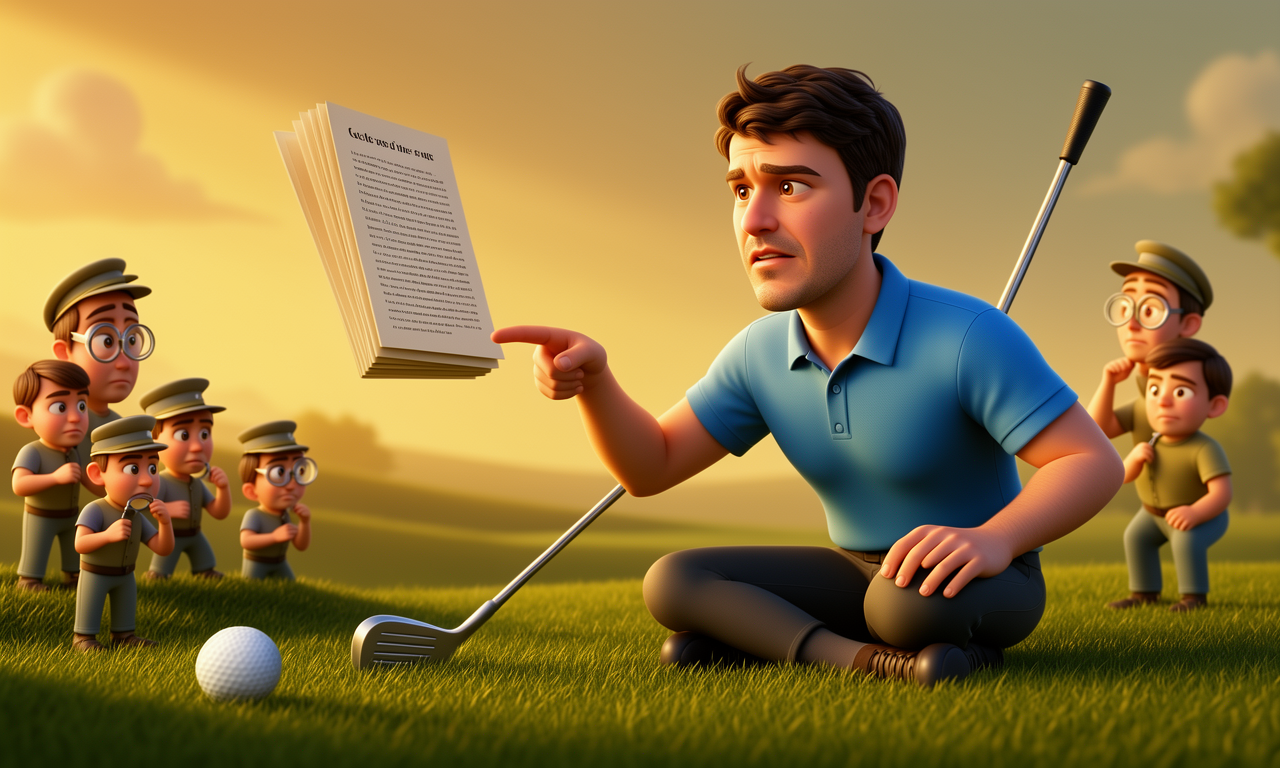
So, it turns out this whole "gentleman's game" thing might be a touch more… flexible than we’d all optimistically assumed. Brooks Koepka, a man whose major haul suggests he knows a thing or two about not just playing golf but also, crucially, winning it, has recently shone a rather unflattering light on the PGA Tour's rather… shall we say, interpretive stance on rule enforcement. Honestly, the Tour's vaunted self-policing system feels less like a finely tuned instrument and more like a suggestion box filled with dandelion fluff.
Koepka, bless his dry-witted soul, dropped some observations that hint at a deep, possibly weary, familiarity with the human capacity for minor larceny. He’s talking about those subtle nudges of the ball to a better spot in the gnarly rough, or that little extra pat on the turf around the hole. These aren't just harmless quirks, mind you. If actually called out and penalized, these little maneuvers could, you know, actually change who’s hoisting the trophy. But as Brooks implies, penalties for these sorts of things are about as common as a quiet moment at a Ryder Cup.
The real kicker, according to our five-time major champ, is the sheer slipperiness of proof. You can absolutely give your stance or your lie a little tweak when no one’s looking, especially when you’re deep in the fairway jungle. But proving it to an official? That’s where it gets tricky. It’s the kind of situation that would have philosophers stroking their beards over the nature of evidence, if we weren’t all more concerned about birdies and bogeys.
And this isn't just hypothetical navel-gazing. Remember that rare penalty Bryson DeChambeau got for something similar at the 2026 Open? It was supposed to be a stark reminder of the Tour’s vigilance, but instead, it just highlighted how often these things slip through the cracks. It’s like asking a cat to patrol a fish market.
Then there’s the grim business of "trenching" on the greens. This is where players go a bit overboard patting down spike marks and divots, often right in front of and behind the ball. Combine that with the widespread adoption of fancy green-reading techniques, and the formerly pristine surfaces start looking more like a well-trodden sheep pasture. The channels these guys create, Brooks suggests, can subtly steer a putt right into the cup. You start to wonder if these greens are as impartial as a math textbook.
Seriously, the whole enforcement thing feels a bit chaotic. When a big name like DeChambeau gets flagged, but all the whispers about Wyndham Clark’s win at Shinnecock Hills just floated away without a USGA peep, you get the distinct impression that rules are enforced based on who you are and how much attention you’re drawing. Koepka’s blunt assessment suggests the Tour’s self-regulation is less a sturdy fortress and more a polite agreement, easily swayed by reputation and the spotlight.